By Editorial Team
Most brands struggle to connect with customers personally because there’s just too much digital noise, and their old-school loyalty programs end up feeling totally generic. Using Antavo’s LLM (Large Language Model) tech is the fix, allowing for a level of personalization and engagement we couldn’t really do before. But how do you actually get past just giving out points and start building real, lasting relationships with customers?
Key Takeaways
- Integrating Antavo’s LLM lets you hyper-personalize loyalty, using AI to generate content and change up rewards on the fly.
- To make it work, you absolutely need a clean, well-segmented customer database so the LLM has accurate behavior and preference data to learn from.
- By switching from static programs to these adaptive loyalty experiences, brands see real, measurable bumps in customer lifetime value (CLTV) and engagement.
- A huge mistake is just letting the LLM run wild without a human checking the work. You’ll end up sending impersonal or weird messages that just push customers away.
- The future of loyalty is a system that’s always learning and adapting in real-time, getting ahead of what customers want and interacting with them proactively.
The Problem: Generic Loyalty in a Personalization-Hungry Market
For a long time, loyalty programs were simple: spend X, get Y. That model can drive some repeat business, sure, but it doesn’t build any real brand affinity. People are over the static points and generic discounts. They expect you to know them, get ahead of what they need, and give them something that feels like it was made just for them. It’s not a small thing, a recent eMarketer report found almost 70% of shoppers say personalization matters when they decide where to spend money. Still, most programs treat everyone the same. That gap is exactly why you see low engagement, high churn, and a total failure to create actual brand fans.
I’ve seen so many brands hit this wall. They pour money into a loyalty platform and watch engagement go flat as soon as the novelty is gone. The program offers a free coffee after ten, but does it know that one customer only drinks coffee in the morning and prefers tea later? Or that another guy keeps looking at travel gear and would jump on a luggage discount, not another t-shirt offer? Usually, no. These systems are purely reactive. They can’t be proactive, and they’re definitely not predictive. All the data is sitting right there, but actually connecting it to a personalized action, for every single customer, has been the million-dollar problem.
What Went Wrong First: The Limitations of Rule-Based Personalization
Before we had decent LLMs, the only way to attempt personalization was with these clunky, rule-based engines. It was all about setting up a web of “if-then” logic: if they buy product A, show them product B. If they hit $200, send the 15% off coupon. It sounded logical, but in practice, the whole thing became a rigid, unmanageable mess. I’ve seen marketing teams burn months just trying to map out every possible customer path and what to do for each one. The number of rules would explode, and keeping it all updated was a full-time job. A new product line or a simple change in customer taste could mean tearing down the whole structure and starting over.
Worse, those rule-based systems are just dumb. They can only follow the script you write. They can’t figure out what a customer *means*, understand a typed question, or pick up on subtle shifts in how someone feels about the brand. A classic example is the system that sends a happy birthday discount to a customer who just filed a furious complaint yesterday, it’s completely tone-deaf and makes things worse. We saw this lead to these jarring, annoying experiences that actively destroyed customer trust. We learned the hard way that rules give you structure, but they kill any chance of a dynamic, human-feeling interaction. That inflexibility was the main reason we couldn’t get to truly smarter loyalty programs.
The Solution: Antavo’s LLM Integration for Adaptive Loyalty
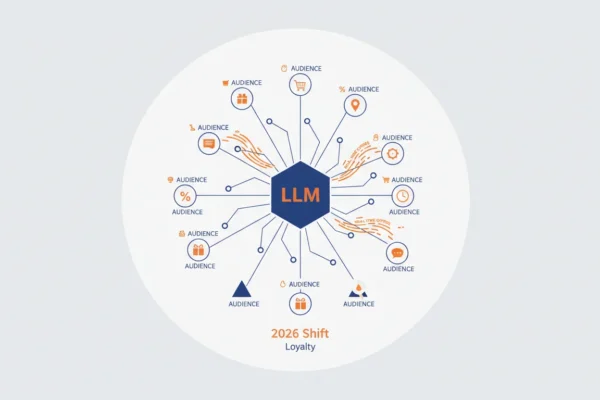
Hooking Antavo’s platform up with large language models is a massive step up for fixing these personalization problems. The point is to give marketers a tool that can chew through mountains of data and spit out relevant, contextual loyalty experiences for every single person, which is impossible to do by hand. The whole idea is to stop treating people as big, static segments and start engaging with them one-on-one, dynamically.
Step 1: Data Unification and Enrichment
You can’t have a successful LLM project without clean, complete data. It’s that simple. Antavo’s platform is good at pulling together all your customer data from different places, purchase history, what they do on your website, app activity, social media comments, support tickets, and survey answers. Putting all that together gives you that 360-degree customer profile marketers are always talking about. The LLM then takes in all that rich data. For a retailer, that might mean seeing a customer who only buys sustainable clothes, reads all your blog posts on ethical sourcing, and even showed up for that beach cleanup you sponsored. It’s a picture of their values, not just their shopping cart.
If you don’t have that solid data layer, the LLM is just guessing, like you’re trying to talk to a stranger about their life. You have to put data hygiene and integration first, making sure every customer touchpoint is captured and ready to use. It’s a big project, no doubt, but the payoff in what you can do with personalization is huge. A well-fed LLM can spot patterns across millions of customer records that a team of human analysts would never catch.
Step 2: AI-Powered Personalization Engine
Once the data is in, the Antavo LLM gets to work. It builds a deep understanding of every single customer’s tastes, habits, and likely next moves, going way beyond lumping them into crude segments. This opens up a few powerful new capabilities:
- Dynamic Content Generation: Forget pre-written templates. The LLM writes personalized emails, product recommendations, and loyalty updates on the fly. For that sustainable clothing shopper, it might write an email about new eco-friendly stock, offer her bonus points for posting a sustainability tip, or invite her to a private webinar with a green designer. The specific language, the tone of voice, and the offers themselves are all tailored to her unique profile.
- Adaptive Reward Structures: Your loyalty points get a lot more flexible. The LLM can figure out what reward a specific customer would actually want and suggest it. For one person, that’s a simple discount. For another, it’s early access to a new drop, a special experience, or a chance to donate points to a cause they care about. It’s an individualized menu of rewards powered by predictive analytics, not a generic catalog.
- Proactive Engagement Triggers: The LLM is always watching for signs of churn or opportunity. If someone’s engagement drops off, or they keep looking at the same product category but never buy, the system can automatically step in. It might send a soft reminder, a useful piece of content, or a small incentive to get them over the line. It’s about saving customers before they’re already out the door.
- Enhanced Customer Service Integration: When a loyalty member calls support, the LLM gives the agent an instant summary of that person’s entire history, their loyalty status, preferences, and recent activity. This lets your team provide faster, smarter, and more empathetic help, which just reinforces the feeling that you actually know who they are.
This stuff enables totally new ways of interacting with customers that just weren’t possible to do at scale before. I’ve personally seen an LLM-powered system notice that one customer prefers digital content to direct mail and another engages more with video than text, and then it automatically changes all future communications for them. It just keeps learning and getting better. It’s iterative.
Step 3: Continuous Learning and Optimization
The best thing about LLMs is that they learn and get better on their own. Every single interaction, a purchase, a click, a page view, is a new piece of data that helps the model refine its picture of each customer. Antavo’s system is constantly checking if its recommendations and messages are actually working. Did that offer get a sale? Did that email get opened? This constant feedback loop lets the LLM adjust its own strategy, making the personalization sharper and more effective over time. That cycle of analyzing, adapting, and refining is the entire difference between this and the old, static rule-based junk.
The Result: Measurable Gains in Customer Loyalty and Revenue
Putting Antavo’s LLM to work delivers real results you can measure on your bottom line. The biggest one is a serious jump in customer lifetime value (CLTV). When people feel like you actually get them and value them, they stick around longer, buy more often, and spend more money. It’s not just a feeling. A HubSpot report on customer loyalty found that companies doing personalization well see a 20% lift in customer satisfaction, which feeds right into CLTV.
Beyond just CLTV, brands see much higher engagement with the loyalty program itself. It makes sense, personalized offers are just more interesting. That means more email opens, more clicks on product recommendations, and more people actually participating in the program’s activities. One fashion retailer I know of saw a 25% jump in members interacting with their personalized content just six months after they rolled this out. That’s not a small tweak. It’s a completely different level of customer interaction.
And don’t forget the efficiency win for your marketing team. They can stop spending all their time manually pulling segments and writing a dozen versions of every email. Instead, they can focus on the big picture strategy and creative, while the LLM does the grunt work of personalizing everything. This frees them up to actually think and innovate instead of being buried in repetitive tasks. And because the system adapts to customer tastes on its own, campaigns stay relevant longer, meaning less time spent going back to the drawing board. A smarter loyalty program is also a much more efficient one.
What is Antavo LLM integration in the context of loyalty programs?
It means using a large language model inside the Antavo platform. The LLM analyzes all your customer data to figure out individual tastes and then automatically creates personalized experiences, messages, and reward ideas in real-time.
How does LLM technology personalize loyalty experiences?
The LLM personalizes loyalty by digging through all a customer’s data, what they buy, browse, and click on. From that, it figures out their interests and habits, then creates custom content, suggests rewards they’d actually want, and triggers messages based on their specific profile.
What kind of data is needed for effective Antavo LLM loyalty integration?
For it to work well, you need one clean, complete set of data. This has to include purchase history, site/app behavior, marketing engagement, support tickets, and any preferences customers have shared. The more data you feed it, the smarter it gets about each person.
What are the main benefits of using LLMs for smarter loyalty?
The main benefits are a higher customer lifetime value (CLTV) and more people engaging with your loyalty program. You also get better customer satisfaction because of the deep personalization, and your marketing team becomes way more efficient since the AI handles a lot of the content and recommendation work.
Are there any challenges or potential downsides to implementing LLM-powered loyalty?
The big challenges are getting your data clean and unified in the first place, which can be complex. You also have to keep a human in the loop to make sure the AI’s output isn’t weird or creepy and to handle the ethics. And you have to be careful not to over-promise what personalization can do.
Moving to an LLM-powered loyalty program is a total rethink of how you connect with customers. By using this tech, companies can build much smarter programs that lead to deeper engagement and actual business growth. If you want to see how other companies are dealing with the data side of this, check out the story on Urban Threads’ 2026 Data Unification Crisis. For the bigger picture on why this data foundation matters so much, read up on Marketing Data Supply Chains: 2026 Imperatives. And to see where this is all heading, look at how LLM Loyalty is driving a shift to real-time offers.