 By Dakota Ramirez
By 2026, just selling a product won’t be enough. Customers now expect experiences built just for them, which means using hyper-personalization is the only real way for a brand to stand out and survive. The problem is that every competitor is already shouting about being “customer-centric,” so how does any business actually prove it?
Key Takeaways
- By 2025, 72% of consumers will expect brands to engage them personally, a massive change from old-school generic marketing.
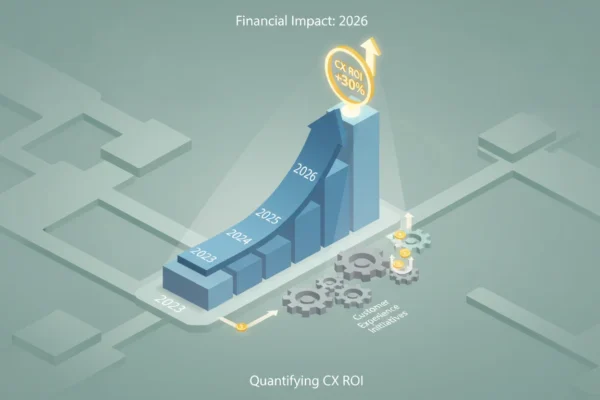
- Using advanced hyper-personalization can boost customer lifetime value by 20% over brands that only do basic stuff.
- Even with obvious upsides, a tiny 15% of marketing teams actually use AI insights for real-time personalization everywhere.
- To do this right, you need a unified customer data platform (CDP) to pull all your first-party data into one place.
- With 68% of consumers worried about data privacy, building trust through ethical collection and clear policies is everything.
72% of Consumers Expect Personalized Engagement by 2025
Any idea that personalization is just a ‘nice-to-have’ is completely outdated. We saw it coming, and an early 2025 Statista report put a number on it: 72% of consumers flat-out expect it. And we’re talking about way more than just putting a first name in an email subject line. This is about knowing what they need before they do, suggesting the right products without them having to search, and showing them content that actually connects with where they are in life right now. I see this firsthand with my e-commerce clients all the time. The ones still blasting generic ads at huge audience segments are just burning money on ad spend and watching their churn rates climb. A one-size-fits-all message doesn’t work anymore. It’s that simple. Customers have endless options, so they’ll always gravitate to the brand that actually gets them.
Brands Using Hyper-Personalization See a 20% Increase in Customer Lifetime Value
The money part is what gets everyone’s attention. A recent eMarketer analysis showed that brands doing hyper-personalization right see a 20% jump in customer lifetime value (CLV) over competitors using basic or no personalization at all. That’s a huge lift for long-term profit. When a brand keeps delivering experiences that feel like they were made just for one person, that person becomes loyal, which means they buy more often, spend more each time, and are more open to trying new products. For example, a fashion retailer’s AI might recommend a full outfit that works with a customer’s past buys, browsing history, and even the weather where they live, completely blowing past a generic “you might also like” carousel. That kind of predictive thinking makes customers stick around in a way that old-school marketing can’t touch. All those small, smart interactions add up, building a real relationship over time and turning single purchases into an actual conversation.
Only 15% of Marketing Teams Fully Integrate AI-Driven Insights for Real-Time Personalization
So everyone knows they need to do this, but there’s a huge gap between knowing and doing. A late 2025 HubSpot research paper dropped a bomb: only 15% of marketing teams are actually using AI-driven insights for real-time personalization across every channel. That number is just wild. Too many companies are stuck with siloed data, segmenting customers by hand, and only reacting after the fact. They’ll personalize an email subject line but then the website or app experience is totally generic and disconnected from what the user just did. The real magic happens when it’s all instant. When a customer abandons a cart, the follow-up shouldn’t be some generic “you left something behind”, it needs to show the exact items, maybe offer a smart incentive, and even suggest things that go with it. This takes a solid data setup and machine learning, plus a big cultural shift away from old-school campaign cycles. The tech is getting cheaper and easier to use, so that’s rarely the real blocker. The problem is usually internal politics and not having people who know how to run these systems. Companies are sitting on mountains of first-party data but can’t turn it into anything useful, which is exactly why getting a unified customer data platform (CDP) is so important.
My Take: The “Data Volume” Myth
I hear it all the time: “Hyper-personalization is only for giant companies with huge data lakes. We don’t have enough data.” That’s just wrong. It’s a myth I’m constantly trying to bust. Having more data can help, sure, but the quality of your data and how you use it is so much more important than just having a lot of it. Even a small or mid-sized business can make a huge difference here by focusing on the first-party data they already have, purchase history, browsing clicks, email opens, support tickets. You pull that information together, even if it’s just for a few thousand customers, and create a single profile. From there, you can use simple rules or basic machine learning to trigger experiences that feel personal. Think about a local bookstore tracking what genres you buy and sending you a heads-up when your favorite author has a new book out. That’s hyper-personalization. You don’t need to collect every possible byte of data on a person. You just need to collect the right data and use it smartly. The real roadblock is usually not knowing what to collect or what to do with it. My advice is always the same: start small, pick a couple of things that will have a big impact, and build from there.
68% of Consumers Concerned About Data Privacy
All this data-driven work has one giant condition attached: you have to earn customer trust. A 2025 IAB report found that 68% of people are worried about data privacy, and they’re much more likely to buy from brands who are upfront about what they collect and why. This isn’t some minor detail you can ignore. It’s the entire foundation of the relationship. If you’re grabbing personal data without getting clear consent or explaining how it helps the customer, you’re going to alienate people, fast. The blowback can be anything from a PR nightmare on social media to serious regulatory fines. So when you’re setting up personalization, you have to put ethical data collection and clear privacy policies first. Give customers real control, like easy ways to opt out of certain tracking or data sharing. You also have to be really clear about the trade-off. Instead of a vague “we collect data,” say something like, “We track your browsing so we can recommend better products for you.” People need to feel safe sharing the very information that makes great personalization possible. If that trust isn’t there, the fanciest AI engine in the world is completely useless.
For real brand differentiation, you have to commit to hyper-personalization and move past generic segmentation toward understanding each customer. When you use data strategically and make earning trust your top priority, you build the kind of deep loyalty that creates long-term growth.
The difference between personalization and hyper-personalization
Think of it this way: personalization is grouping people, like sending an email to “customers who bought shoes.” Hyper-personalization is about the individual, using real-time data and AI to know that *you* just looked at a specific pair of boots, the weather is turning cold where you live, and you’re due for a new pair. It’s a one-to-one experience that adapts instantly across every channel.
Essential data for effective hyper-personalization
First-party data is king. You need purchase history, what they’re clicking on your site, email engagement, any support chats, and app usage. The most powerful stuff is real-time behavioral data, because it lets you adjust the experience on the fly. The goal is to get all of this into one unified profile in a CDP so you can actually use it.
How small businesses can start with hyper-personalization
You don’t need a massive budget. Start by using your existing first-party data with tools you probably already have. Set up automated email flows for abandoned carts or a welcome series that reacts to a user’s first action. Use simple plugins to show “recently viewed” items on your website. It’s about finding small, high-impact ways to make the experience more relevant, not boiling the ocean.
Common hyper-personalization pitfalls to avoid
The biggest mistakes are having your data scattered everywhere, not having a clear goal, and ignoring privacy. People also get into trouble by automating everything without a human check, which can lead to creepy or nonsensical recommendations. Another classic is obsessing over the tech instead of thinking about how it actually makes the customer’s life better. And of course, not testing and improving your efforts is a recipe for failure.
The impact of hyper-personalization on customer experience (CX)
It massively improves the CX. When every interaction is relevant, the experience feels smoother and more helpful. It removes the guesswork for the customer and makes them feel like the brand actually understands them, which is a huge driver of satisfaction and loyalty. Better CX leads directly to more repeat business and people recommending your brand to others.