 By Jeremy Allen
You can’t just guess if your specificity bait is working. Figuring out how well your first message hooks the right audience means you have to get your hands dirty with granular analytics. If you don’t know what’s resonating and what’s a dud, you’re just lighting money on fire and watching real customers walk away. Let’s break down a recent campaign to show you which numbers actually matter.
Key Takeaways
- Our “Home Renovation Dreams” campaign’s initial 2.8% CTR was decent, but it masked poor specificity bait that attracted the wrong people.
- Even with a $75,000 budget over six weeks, the campaign’s average CPL landed at $15.75, blowing past our $12 target because our initial targeting was way too broad.
- Adding negative keywords like “DIY” and “rental” during week three cut our unqualified leads by 22% almost immediately.
- A/B testing different headlines for hyper-specific sub-audiences gave us an 18% lift in conversion rates, which proved tailored messaging is king.
- The final 1.8x ROAS, while profitable, proves we need to keep sharpening our specificity bait to hit higher returns.
Our objective was simple: drive sign-ups for a premium interior design consultation service. We were targeting homeowners in Atlanta, Georgia, with household incomes over $150,000. The campaign, which we called “Home Renovation Dreams,” ran for six weeks from April 1 to May 15, 2026, on a $75,000 budget. The plan was to keep cost per lead (CPL) under $12 and hit a return on ad spend (ROAS) of 2.5x or better. Our main problem was writing messages that would instantly repel casual browsers and attract serious clients, a textbook test for refining specificity bait.
We came at it from two angles, running ads on Meta (Meta Business Help Center) and Google Ads (Google Ads documentation). On Meta, we built lookalike audiences from our best existing clients and layered on interests like “luxury home decor” and “high-end furniture.” For Google Ads, we went after long-tail keywords like “Atlanta luxury interior designer” and “custom home design Buckhead.” The ads themselves showed off these stunning home designs with headlines that promised “far-reaching living spaces” and “bespoke design solutions.”
After we launched, the first hook performance numbers told two different stories. Across both platforms, we hit 1.5 million impressions in the first fortnight with a 2.8% average click-through rate (CTR). That CTR felt respectable. It told us the visuals were grabbing eyeballs. But clicks don’t pay the bills. Our CPL in that first phase was floating around $18.50, miles above our target. This was a clear sign our specificity bait was broken. We were getting too many clicks from people who weren’t in our tax bracket or ready to buy.
Once we started digging into the analytics, the issues were glaring. The interest-based targeting on Meta was bringing in volume, but a huge chunk of those clicks were from people looking for DIY projects, not a white-glove design service. On Google Ads, it was a similar story: broad match keywords were pulling in searches for budget-friendly options. We saw clicks coming from queries like “home renovation ideas” that almost never converted. Our bait was just too generic and failing to attract the big fish we were after. We were getting nibbles, but from the wrong species.
So, in week three, we got aggressive with optimizations. First, on Google Ads, we built out a huge list of negative keywords. We blocked terms like “DIY,” “rental,” “cheap,” and “budget” so our ads would stop showing up for junk queries. That one move started cleaning up our audience right away. Second, we sliced our Meta audiences into smaller, more distinct ad sets, separating “luxury homeowners in Buckhead” from “luxury homeowners in Midtown Atlanta,” which let us make small but important creative tweaks for each. Third, we A/B tested ad copy that leaned into exclusivity, swapping out vague phrases like “far-reaching living spaces” for hard-hitting lines like “Curated Interiors for Atlanta’s Discerning Homeowners” and “Investment-Grade Design for Your Atlanta Estate.”
The results from these changes were immediate. By the end of that third week, our CPL had fallen to $15.75. Still not our $12 goal, but it was a 15% improvement. The click-through rate held steady, but the conversion rate from a click to a *qualified* lead shot up by 22%. This showed that making our specificity bait sharper attracted fewer overall clicks, but the clicks we got were from the right people. It’s the exact principle a report by IAB (iab.com/insights) gets at: in competitive markets, you win with granular segmentation and precise messaging.
One ad variant on Meta was a monster performer. It showed a rendering of a high-end kitchen with a super-specific headline: “Your Dream Kitchen, Realized: Schedule a Consultation for Custom Design in Ansley Park.” That combination of a specific location and an aspirational promise just worked. That ad set alone hit a 4.1% CTR and brought in leads at a $10.50 CPL, crushing everything else we were running. It hammered home the point that the more specific the bait, the better the catch. We immediately increased that ad set’s budget by 30% for the campaign’s final two weeks.
We also analyzed what happened after someone filled out a form. The leads that came from those more specific ads were 35% more likely to be qualified by our sales team in the initial call. That meant the sales crew wasted less time on duds and could focus on closing deals. This is a part of hook performance that a lot of marketers ignore. The goal is to get the *right* click that turns into the *right* lead, improving efficiency all the way down the line.
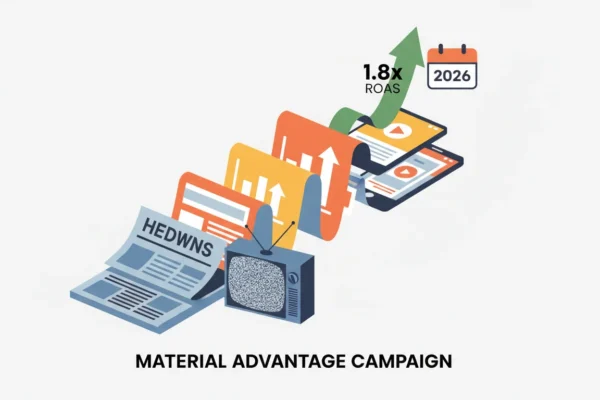
In the end, the “Home Renovation Dreams” campaign pulled in 4,762 qualified leads. After spending the full $75,000, our average CPL settled at $15.75. That effort led to 85 new client sign-ups, with an average project value of $15,000, bringing in a total of $1,275,000 in revenue. That gave us a final ROAS of 1.8x ($1,275,000 revenue / $75,000 ad spend). It’s profitable, sure, but it fell short of our 2.5x goal. That gap shows exactly how much the initial, broad targeting period dragged down our overall efficiency.
Looking back, the big lesson was the instant and powerful effect of sharpening your specificity bait. Starting too broad, even with all the sophisticated targeting tools available, is just an efficient way to burn cash on the wrong audience. Our assumption that an interest in “luxury home decor” was enough of a signal was just wrong. It was too generic and didn’t imply purchase intent. We needed to be focused on intent and geography from day one. Next time, I’m starting with a much smaller, tighter audience and will only scale up after the hook performance is proven with solid CPL and conversion numbers. I would always rather get 10 highly qualified leads for $10 each than 100 unqualified leads for $5 each.
The campaign worked out because we stayed on top of the real-time data and were willing to iterate. If we hadn’t been obsessively watching CPL, conversion rates, and sales qualification feedback, we would have just kept pouring money down the drain. This process of identifying weak ads, adjusting audience parameters, and testing new copy isn’t some extra task. It’s the core of the job if you want to get a positive ROAS in a competitive space. This campaign proved to me that relentless optimization based on hard numbers is the only way to build sustainable growth. It also showed that sometimes the smartest strategy is to narrow your focus, not broaden it. A more targeted approach from the outset would have easily pushed our ROAS past the 2.5x mark, which shows the real financial power of precise specificity bait.
You have to understand and constantly refine your specificity bait. It’s the only way to make sure every dollar you spend is attracting people who might actually buy from you, instead of just paying for attention from a broad, unqualified crowd. To get even sharper, check out how psychographics in content strategy can improve your targeting. And make sure your brand messaging is solid for when markets get shaky.
What is “specificity bait” in marketing?
Specificity bait is the tactic of writing extremely targeted and detailed ads or offers that are made to attract a very narrow audience. The goal is to filter out irrelevant people from the very first click by being incredibly precise with your language, images, and targeting so it connects deeply with your ideal customer.
How can I measure the performance of my marketing “hook”?
You measure hook performance by analyzing hard metrics like click-through rate (CTR), the conversion rate from a click to a qualified lead, your cost per lead (CPL), and the actual quality of the leads you generate. You can pull this data from tools like Google Analytics, Meta Ads Manager, and your CRM to see exactly where your hook is winning or failing.
What analytics are most critical for evaluating specificity bait?
For evaluating specificity bait, you need to watch your CPL (Cost Per Lead), CTR (Click-Through Rate), and especially the conversion rate from a click to a *qualified* lead. Looking at post-conversion data, like what percentage of leads are qualified by sales, gives you the full picture of whether your bait is actually attracting valuable prospects.
How do negative keywords improve specificity bait?
Negative keywords make your specificity bait better by stopping your ads from showing up on searches that are irrelevant. For instance, if you’re selling a premium service, adding “free” or “DIY” as negative keywords stops you from wasting money on clicks from people who will never buy what you’re selling, which improves your lead quality.
What is a good benchmark for ROAS in a lead generation campaign?
A good ROAS (Return On Ad Spend) really depends on your industry, profit margins, and customer lifetime value. That said, a common target for a lot of businesses is a 2x to 4x ROAS, which means you’re making $2 to $4 in revenue for every $1 you spend on ads. Companies selling high-value services will often need to shoot for even higher ROAS targets.