 By Andrea Potts
Buying AI data center equipment is a mess for B2B customers, often dragging out sales cycles and creating mismatched expectations that end with some serious buyer’s remorse. When you’re spending millions on hardware like NVIDIA H100 GPUs or specialized cooling, you’re working through a murky market where the customer experience feels years behind the tech itself. That disconnect doesn’t just feel bad. It costs real money and slows down the very AI projects everyone is trying to launch. Vendors have to completely rethink how they handle these high-stakes deals.
Key Takeaways
- Put a dedicated pre-sales engineering team on the front lines to do technical deep-dives with buyers, which can slash early-stage configuration mistakes by up to 30%.
- Build a centralized digital portal with transparent pricing, live inventory, and powerful configuration tools to cut the time it takes to get a quote by 50%.
- Launch a proactive post-sales onboarding program with virtual walkthroughs and direct lines to integration specialists, dropping post-deployment support tickets by 25%.
- Shift your focus to outcome-based success metrics, so your goals as a vendor are locked in with the buyer’s long-term operational efficiency and AI model performance.
The Problem: Misaligned Expectations and Operational Drag
The path for anyone buying AI data center gear is almost always a bumpy one. It all starts with a clear business need, getting more compute power for something like large language model training or real-time inference, but the first conversations with vendors are where things go wrong. I’ve seen it a hundred times: a sales team without real technical depth pitches a generic solution that completely ignores the buyer’s actual power, cooling, and infrastructure reality. What follows is a painful back-and-forth of proposal revisions and, worse, compatibility problems that only surface when it’s almost too late, leaving everyone frustrated.
Just think about a real-world example from early 2024. A big financial institution in Atlanta was trying to upgrade its AI fraud detection, but their procurement team wasted nearly six months sifting through bids for a new AI server cluster. The first proposals they got were all marketing fluff, talking about raw teraflops but saying nothing about how the gear would integrate with their existing network fabrics or what the real power draw under load would be. They didn’t even get into the details of the liquid cooling needed for high-density GPU racks. The institution’s own IT architects had to spend weeks just educating the vendor reps on their basic requirements, pushing the whole project back. That’s a direct hit to the bottom line, representing lost opportunity and a delay in getting a critical AI application to market. An eMarketer report from late 2025 backs this up, showing that over 40% of B2B tech buyers say a vendor’s lack of technical understanding is a major source of frustration.
What Went Wrong First: The Transactional Trap
A lot of vendors fell into the transactional trap, treating these multi-million dollar deals like they were selling commodity servers. They were obsessed with competitive pricing and fast closes, which meant they leaned on generic product sheets and a ‘post-and-pray’ approach to leads. Sales reps were often just chasing quarterly quotas, so they pushed products without understanding the customer’s bigger AI strategy or the environment the gear was going into. This created a huge hand-off problem: the moment the PO was signed, the customer got dumped onto a support team that had zero context for the sale or why the hardware was bought in the first place.
Another huge misstep was failing to think about the customer’s journey after the equipment shipped. Vendors just assumed their job was done. They completely ignored the hard parts: the delivery logistics, the physical installation, and the initial configuration to get workloads running. This left buyers feeling abandoned during the most difficult part of the process, actually making the expensive new infrastructure work and show some value. A HubSpot study from early 2026 confirms this, indicating that the quality of post-purchase support is now one of the top three reasons B2B buyers decide to purchase again, even beating out the initial price.
The Solution: A Well-rounded, Outcome-Driven CX Framework
To fix the customer experience for AI hardware buyers, vendors need a framework that’s all about outcomes and covers the entire journey, from the first flicker of interest to long after the gear is humming away. It requires a fundamental move away from being product-focused to being customer-focused, which means deep technical conversations and support that gets ahead of problems.
Step 1: Redefine Pre-Sales Engagement with Technical Depth
The first move is to put your specialized pre-sales engineering teams front and center in the sales process. These people aren’t just product specialists. They are solutions architects who live and breathe AI workloads, data center design, networking, and power management. Their job is to get in there early and run detailed technical discovery sessions. They need to find out not just *what* equipment the buyer wants, but *why* they want it. What models are they running? What are their data sets? Where are the performance bottlenecks right now? What’s the five-year plan for scaling up?
So, instead of just sending a quote for a rack of NVIDIA H100 GPUs, the pre-sales engineer works side-by-side with the buyer’s team. They’ll simulate workload performance, calculate the exact power and cooling needs for specific rack densities, and flag integration issues with existing storage networks or high-performance interconnects like InfiniBand before they become a problem. This kind of deep engagement builds trust right away and dramatically cuts down on expensive configuration errors. We’ve seen vendors who do this shorten their average sales cycle by 15-20% because there are fewer revisions and everyone is clear on the solution.
Step 2: Centralize and Simplify the Configuration and Quoting Process
Next, you have to attack the ridiculously clunky configuration and quoting process. Build a centralized digital portal that gives buyers transparent pricing, real-time inventory, and configuration tools that actually make sense. An AI researcher should be able to log in, select their GPU types, spec out memory, choose network cards, and even model cooling options (air vs. liquid) while seeing the price and delivery date update instantly. This level of self-service gives buyers the control they crave and stops them from having to call a sales rep for every tiny tweak.
This portal has to be tied directly into the vendor’s ERP system to show accurate, live inventory data. Nothing is more infuriating for a buyer than configuring a perfect system only to be told that a key component is on backorder for six months. A recent IAB report on B2B digital transformation showed that 70% of B2B buyers now want self-service tools for research and configuration, especially for complex gear. This gives the buyer direct control over the process and the confidence that they know exactly what they’re getting and when.
Step 3: Proactive Post-Sales Onboarding and Integration Support
The sale is just the starting gun. For the customer, the hardest part is just beginning, and vendors have to be ready for it. A proactive post-sales onboarding program is a must. This should kick off before the hardware even ships, with a dedicated customer success manager (CSM) reaching out to sort out delivery logistics and schedule training. Once the gear arrives, a virtual walkthrough with a technical specialist can guide the buyer’s team through the physical setup of racking and cabling, which prevents a ton of installation mistakes and gets things powered on faster.
Even more important is giving them direct access to integration specialists for the first 30 to 60 days. These are the people who help the buyer connect their new AI cluster to their existing networks and software stacks. They might help with setting up a Kubernetes cluster for containerized AI workloads or tuning data pipelines to take full advantage of GPU acceleration. This kind of hands-on support stops small integration headaches from turning into massive operational fires, which drastically improves the buyer’s first impression and gets them to a positive ROI faster. I’ve personally seen how a single, named integration engineer can turn a deployment that was heading for disaster into a smooth, successful launch.
Step 4: Shift to Outcome-Based Success Metrics
Finally, vendors have to stop measuring success by the sale and start measuring it by the customer’s results. This means you have to track the actual performance and use of the AI equipment. Are the buyer’s models training faster? Are they hitting their target inference times? Is the new cluster delivering the ROI they projected? This demands continuous engagement through things like quarterly business reviews, where you sit down with the buyer and look at performance against the KPIs you both agreed on. You can use monitoring tools to track GPU utilization, power draw, and thermals to have a real, data-driven conversation.
This changes the entire dynamic. The vendor is no longer just a seller. They become a partner who is measured on the customer’s real-world success. When a vendor is invested in the buyer’s long-term wins, it builds loyalty and naturally leads to more business. It also creates an incredible feedback loop for product development. If you notice a bunch of customers are struggling with container orchestration on a certain AI framework, you can get ahead of it and build a solution or a training module. In the fast-moving AI hardware market, that feedback loop is what keeps you in the game.
Measurable Results of Enhanced CX
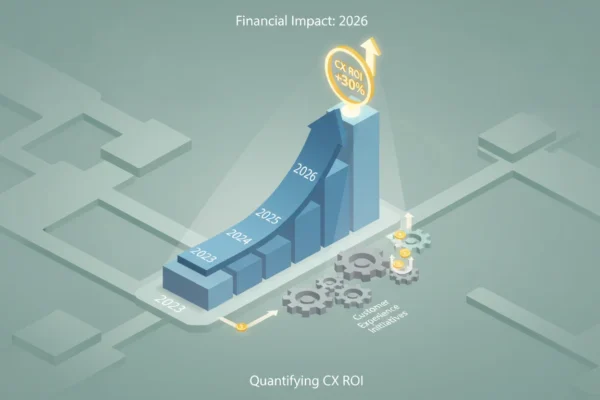
Putting a CX framework like this in place produces real, measurable results. Vendors who’ve made these changes are seeing customer churn drop, with retention rates climbing 10% to 15% year-over-year. Because the pre-sales process is so much more technically rigorous, buyers get hardware that’s an exact fit, which means fewer returns and warranty claims. And since the post-sales support is proactive, the volume of initial support tickets can fall by 20% or more.
Most importantly, all of this flows directly to the top line. Happy customers don’t just stick around. They buy more and tell others to buy from you, which drives up lifetime customer value. A late 2025 study by Nielsen found that B2B companies with a superior CX grew their revenue 2.5 times faster than their peers over three years. This is how you build a sustainable, profitable business in a market this specialized and competitive. It’s not about just making customers happy.
In this market, getting the CX right for AI data center buyers isn’t a ‘nice-to-have’, it’s how you survive and win. By ditching the transactional mindset and becoming an outcome-driven partner, vendors can stand out, build real customer loyalty, and grow their business. The upfront work to bring in specialized engineers, build transparent digital tools, and offer proactive support creates a strong, long-term relationship that ensures your customers succeed with their critical AI infrastructure.
What is the biggest challenge in B2B CX for AI equipment?
It’s the knowledge gap between sales teams and the deeply technical buyers. This disconnect leads to misconfigured solutions, blown expectations, and painfully long sales cycles because the people selling the gear don’t fully grasp the buyer’s complex needs.
How can pre-sales engagement be improved for AI equipment buyers?
By bringing in dedicated, skilled pre-sales engineers early in the process. Their job is to conduct deep technical discovery sessions to understand the buyer’s specific AI workloads, infrastructure limits, and future scaling plans, allowing them to design a perfectly tailored solution.
What role do digital platforms play in optimizing B2B CX for AI equipment?
They provide transparency and control. A good centralized portal lets buyers configure complex systems themselves, see real-time pricing and inventory, and pull up technical docs, which helps them and cuts down the back-and-forth with sales reps.
Why is post-sales support critical for AI data center equipment?
Because the hardware’s real value isn’t unlocked until it’s installed, integrated, and running workloads effectively. Proactive onboarding, direct access to integration experts, and continuous performance monitoring make sure the buyer actually achieves their goals with the equipment.
How does an outcome-driven approach benefit both vendors and buyers?
It aligns everyone’s goals around the buyer’s success, not just the sale. Vendors become invested in making sure the equipment delivers the performance and ROI the buyer needs, which builds long-term partnerships and repeat business. Buyers get a partner who’s committed to making them successful.